When Your ZIP Code Shapes Your Heart: What the New JAMA Study Means for Us and Our Communities
Dec 08, 2025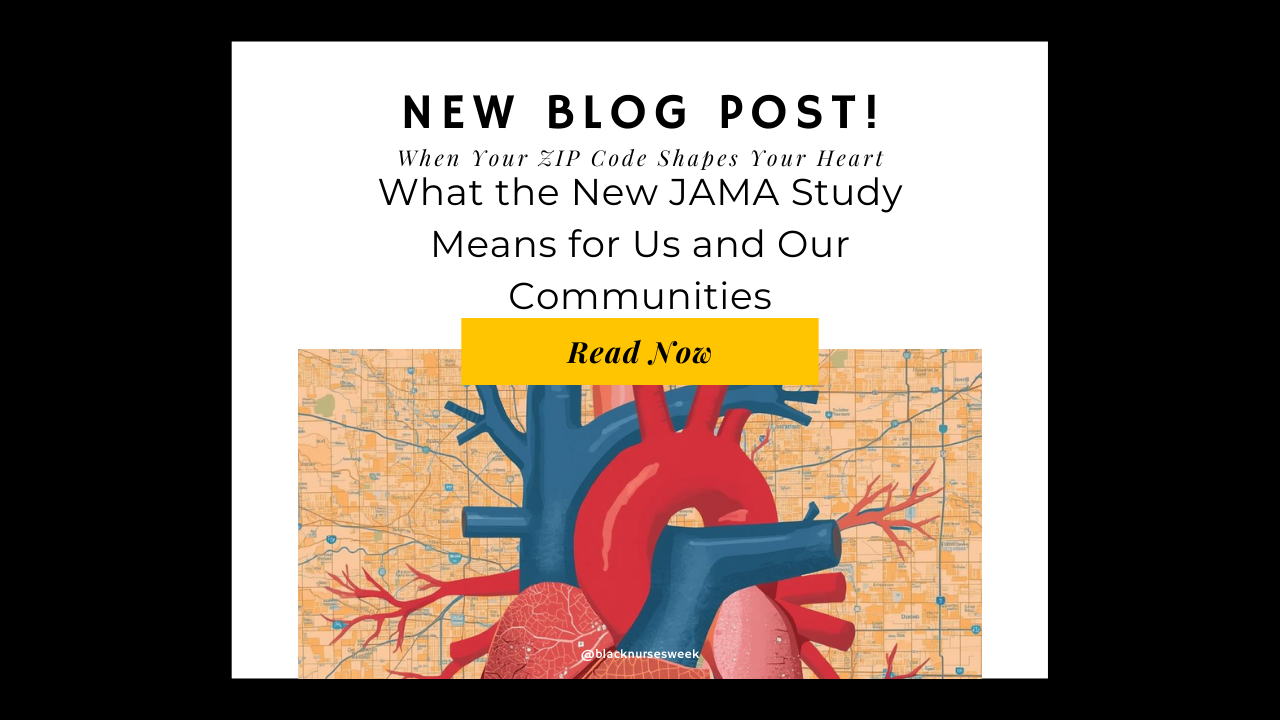
By Black Nurses Week® • Published December 8, 2025
As Black nurses, you already know structural racism is not just a social issue. You see it in your patients, your coworkers, and your own communities. A new study in JAMA Health Forum confirms what many of us have known for a long time. Where we live does not just shape our options. It shapes our health outcomes, including our heart health.
What the study found and why it matters
Researchers examined almost 72,000 neighborhoods across the United States and scored them on how deeply structural racism has shaped housing, education, income, transportation, environment, justice, and more.
They then compared those scores with neighborhood level data on blood pressure, diabetes, obesity, smoking, activity levels, coronary heart disease, and stroke. The pattern was clear. Neighborhoods with higher levels of structural racism had much higher rates of:
- High blood pressure
- Obesity
- Diabetes
- Physical inactivity
- Cigarette smoking
- Coronary heart disease
- Stroke
These differences were not small and they did not disappear after adjusting for age, sex, and access to care. This was not about genetics or individual willpower. It was about systems and structures that have been in place for generations.
This is not a lifestyle problem. It is an environment problem.
As Black nurses, you understand what it looks like when people are blamed for conditions they did not create. This study supports what you see in your practice every day. Zip codes shape heart health far more than any handout about diet or exercise ever will.
When a community is living with:
- No grocery stores or healthy food options
- Unsafe streets and limited spaces to walk or move
- Polluted air and environmental hazards
- Unstable or unaffordable housing
- Financial stress and low wage jobs
- Limited clinics and long waits for care
- Constant stress, racism, and trauma
what often gets labeled as poor lifestyle choices is actually survival. Your patients are not failing. The system is failing them and the conditions around them are written into their bodies.
Equity lens: how this shows up in Black communities
Structural racism does not just sit in policy documents. It shows up in blood pressure cuffs, A1C levels, hospital admissions, and funeral programs. Black communities are more likely to live in neighborhoods with disinvestment, environmental risks, and limited access to healthy options. That is not by accident.
For Black nurses, this is personal. Many of us care for patients who live in these zip codes and we also come from these same neighborhoods. This study gives language and data to realities we already know from experience.
- Neighborhoods with higher structural racism have significantly higher rates of hypertension, diabetes, obesity, and stroke.
- These patterns remain even when researchers account for age, sex, and basic access to care.
- Environment, policy, and history are shaping cardiovascular risk long before an individual shows up in triage.
What we can do as Black nurses
Black nurses sit at the intersection of data and lived experience. You know the research and you know the reality. That gives you a powerful voice in conversations about health and equity.
1. Shift the conversation in clinical spaces
When you hear comments like:
- "They just need to eat better."
- "They do not care about their health."
- "They just need to exercise."
you have an opportunity to correct the narrative. You might say:
"Health choices reflect health access, and access reflects systems, not effort."
Your words help move the focus from blaming patients to examining the conditions that shape their lives.
2. Bring health care and education into community spaces
Meaningful prevention does not always start inside a clinic. It often starts in the spaces where people already gather. You can:
- Offer blood pressure checks at churches, barbershops, sorority and fraternity events, and community centers
- Host Know Your Numbers days that focus on blood pressure, blood sugar, and cholesterol
- Teach families how to recognize early warning signs of heart disease and stroke
- Provide education that respects culture, history, and real life barriers
These smaller, local efforts can create long term impact and help people see heart health as a community concern, not just an individual burden.
3. Advocate locally where decisions are made
Policy is not only shaped in Washington DC. It is also shaped in:
- City council meetings
- School board meetings
- Zoning and planning boards
- County health departments
As a Black nurse, your voice carries weight in these spaces. You can advocate for:
- Grocery stores and fresh food access in food deserts
- Safe sidewalks, parks, and green spaces
- Reliable transportation to clinics and hospitals
- Funding to keep clinics open in Black neighborhoods
- Programs that address housing quality and environmental hazards
You do not need a formal title to influence policy. You need presence, consistency, and truth.
4. Share the stories only you can tell
The study provides numbers, but you provide lived context. You see:
- Elders taking two or three buses to get to fresh food
- Families with no pharmacy nearby for needed medications
- Children growing up near freeways and breathing polluted air
- Patients working multiple jobs with no time or energy left for self care
- Communities carrying the weight of racism and trauma across generations
When you share these stories in meetings, on panels, with researchers, or inside your own institutions, you turn data into human evidence. People listen differently when a Black nurse speaks.
5. Protect your own heart too
Structural racism does not only affect patients. It affects Black nurses who are working inside the same systems, often under constant pressure and scrutiny.
Protecting your own heart and health is part of this work. That can look like:
- Setting boundaries at work when possible
- Seeking mental health support or therapy
- Leaning on spiritual practices or grounding routines
- Making time for joy, rest, and community
- Connecting with other Black nurses who understand your experience
You deserve care too. Caring for yourself is not selfish. It is necessary.
6. Move together instead of alone
One Black nurse speaking truth is powerful. A collective of Black nurses speaking truth together can shift systems.
Through communities like Black Nurses Week, we can:
- Host conversations about structural racism and health
- Share resources and tools for advocacy
- Collaborate with researchers who want to center Black voices
- Highlight the zip codes and neighborhoods that are most affected
- Support each other as we do this work
This study gives us language, data, and confirmation. Our unity gives us power.
Question for the BNW community
Have you seen how zip codes and neighborhood conditions show up in the heart health of your patients or your own family? What changes in your city, workplace, or community would make heart health truly possible where you live and work?